State Representative Matthew Lesser (D) joined colleagues to announce Wednesday that for the state legislature has authorized $44 million for design and construction of a new academic building at Middlesex Community College (MxCC). It will need to be approved by the state Bonding Commission prior to release.
“I promised my constituents at the beginning of this term that I would do what I could to reduce the overcrowding at Middlesex Community College,” stated Rep. Lesser. “This was a team effort and I am proud of the work we were able to accomplish, which will provide the single biggest investment in Middlesex in a generation.”
Lesser singled out for praise his legislative colleagues in Middlesex County, the Board of Regents of Higher Education, and Rep. Betty Boukus and Sen. Andrea Stillman, chairs of the bonding subcommittee of the Committee on Finance. “I particularly want to call out the remarkable efforts of Middlesex President Anna Wasescha, a real force of nature who made the inarguable case that Middlesex’s resources are insufficient to meet rising demand. While this still needs to be approved by the bonding commission, I am hopeful that the arguments made to secure this authorization will help the Bonding Commission approve the item.”
“I want to thank Representative Matt Lesser for his unstinting support of Middlesex Community College, as well as the legislative delegation who supported this initiative, the Board of Regents, Interim President Phil Austin, and the chairs and members of the bonding subcommittee of the Committee on Finance,” said President Wasescha, “Although we have had very little investment in the physical plant of the college for decades, the prospect of a new building comes at a time when we now know a great deal about designing spaces to promote student success and how to do that in extraordinarily energy efficient buildings. The timing is perfect. We thank everyone for this vote of confidence in the college and for investing in the future of this community.”
Senator Danté Bartolomeo (D - Cheshire, Meriden, Middlefield & Middletown) shared similar enthusiasm, saying she was, “thrilled to work with Rep. Lesser for this well-deserved investment in quality education. We are putting our support into a school that has proven its record as a valuable asset to our community.
"Middlesex Community College offers more than 50 degree and certificate programs, and is a valuable partner in the community," said Senator Paul Doyle. "Unfortunately, the college's infrastructure has been neglected over the years, and I am proud to work with my colleagues to achieve this good investment.”
“I am so pleased that the legislation has had the foresight to provide MXCC with an additional building,” stated Representative Joesph Serra. “As my alma mater, this school is close to my heart, and I know it is a great institution that provides a quality education, and that this investment is long overdue.”

Showing posts with label Senator Paul Doyle. Show all posts
Showing posts with label Senator Paul Doyle. Show all posts
Saturday, June 8, 2013


Wednesday, November 16, 2011
Middletown's Legislative Delegation Has Mixed Record On Environmental Protection
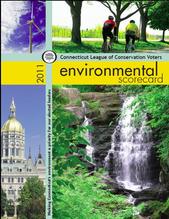
The CTLCV scored legislators' votes on 12 bills in the 2011 session. Some of these votes were in committees, so not all legislators voted on all of those bills. The full report of the CTLCV is available HERE.
Overall, the CTLV concludes that state lawmakers got caught up in the effort to weaken environmental protections that swept the nation this year. However, there were 38 lawmakers with perfect scores, and they led the effort for environmental protection. CTLV Co-Chair David Bingham said:
Connecticut’s core group of legislators who understand the necessity of a healthy environment to sustain a healthy economy were sorely tested this year. Despite the pressures of economic distress, they upheld policies that are critical to providing clean air and water and make Connecticut an inviting state to do business. But holding the line is insufficient. There is much still to do, much still at risk.
Here is how members of our city's delegation were scored:
Paul Doyle (D, Senate 9th) 83%
Doyle voted on all 6 of the scored bills which he was able to vote on. One of his votes was not considered the environmentally responsible one: he voted in favor of the Haddam land swap, which passed.
Len Suzio (R, Senate 13th) 100%
Suzio voted on all 5 of the scored bills which he was able to vote on.
Joe Serra (D, House 33rd) 71%
Serra voted on all 7 of the scored bills which he was able to vote on. On 2 of those, his vote was not considered the environmentally responsible one. He voted in favor of the Haddam Land swap, which passed. He also voted in favor of a bill which would have mandated ATV trails on State Land without providing any money to care for them, this bill did not pass.
Matt Lesser (D, House 100th) 100%
Lesser voted on all 6 of the scored bills which he was able to vote on.
Gail Hamm (D, House 34th) 100%
Hamm did not vote much on environmentally important issues, casting a vote on only 1 of the scored bills she was able to vote on.
Christie Carpino (R, House 32nd) 67%
Carpino voted on all 6 of the scored bills which she was able to vote on. She voted against a bill banning BPA in thermal paper receipts, which passed. She also voted in favor of the Haddam land swap.
Monday, October 5, 2009
Last Illegal Sunday?

As hungry residents crowded the table of fresh produce and prepared dishes like garlic-flavored chard, garlic bread, oatmeal fruit bake and peach cobbler, members of Food Not Bombs joined in the meal happy that this Sunday could be the last in which their actions are considered "illegal."
On Friday, after a concerted effort by Middletown's State Senator Paul Doyle, and Representative Matt Lesser, the legislature passed a budget implementer bill which contained an amended version of a law concerning food distributed to the public as a charity.
The new language is actually stronger than language submitted by State Attorney General Richard Blumenthal. The new language, which replaces the word "seller" with the word "person" to make sure that operations like Food Not Bombs could be shut down again on a technicality.
The Connecticut Health Department attempted to strengthen the language in a way that would have kept the Food Not Bombs meal as an illegal operation, but those changes were rejected by legislators.
The implementer bill is currently on the governor's desk, and while there is a chance she may veto it because of budget differences, there is a level of confidence that the bill is acceptable and will be signed today.
On Sunday, local ministers encouraged parishioners to attend Monday's Common Council meeting where the topic of food distribution is on the agenda.
Friday, October 2, 2009
Revised Charitable Food Distribution Statute Passes House and Senate
Senator Paul Doyle just called to say that the budget implementer bill, which contains the revised statute for charitable distribution of food not prepared in licensed kitchens, just passed the Senate after earlier passage in the House.
It is now on the governor's desk, where there is optimism that she will sign this implementer bill.
It is now on the governor's desk, where there is optimism that she will sign this implementer bill.
Friday, January 9, 2009
Budget vs. Children
Nobody wants to see this come down to "Budget vs. Children."
But -- as with most things these days -- it's a question of spend less or earn more. Either way, we need to face the fact that something has to give. I'm not just talking about the local school budget today. This is also about all the other programs -- outside of the classroom -- which help families and children in our community, and which receive funding from the state government.
On Thursday, the Middlesex Coalition for Children flexed its considerable political muscle by gathering nearly 100 local children's advocates to meet with seven of our area legislators at Middlesex Community College for a little "coffee talk." The event was co-sponsored by the Middlesex Area Interagency Council. Betsy Morgan, the founder and head of the Coalition, said that the meeting was a way to "lay the groundwork for our relationship with legislators, and to let them know how many committed people care about these issues in Middletown." She noted that it's a first step in this year's effort to communicate with state government -- and that the coalition will undoubtedly be visiting Hartford to testify as the legislative session gets underway.
In other words, this is how we lobby for what Middletown's children need.
 First, let's talk about that number I mentioned of "nearly 100 children's advocates". I'm not exaggerating. I counted people I knew from the hospital, the soup kitchen, housing assistance, health care services, the arts, day cares, preschools and special needs programs. Not to mention many, many people who work for or in partnership with the schools, from Superintendent Michael Frechette to the support staff at our neighborhood Family Resource Center. Just about any program in Middletown that helps families was there. As several speakers noted, Middletown is unusually well-organized -- the Coalition has a monthly meeting that brings these organizations together, which makes for a sort of "one-stop-shopping" if you want to see who is working with kids in our community.
The morning offered testimonials from participants in the programs, starting with parent Francis D'Mello, who happens to be the owner of my favorite Indian restaurant in town (Udupi Bhavan out on Saybrook Road.) He spoke about the School Readiness preschool program and how it has helped his two young children prepare for kindergarten. We also heard from beneficiaries of Housing Basic Needs, Youth Services, Husky, and Adult Education and its G.E.D. program. Each of these programs gets some or all of its funding from the state, but the biggest nut is the item called "Educational Cost Sharing" (ECS), which is jargon for the amount of the local school budget that is covered by the state. Christine O'Grady, who moderated a portion of the morning and is a graduate of PLTI*, mentioned that Connecticut is among the worst in the nation when ranked by the percentage of educational costs that are paid for by local, rather than state, taxes.
 Eventually, it was the legislators' turn. One by one, they outlined their support for funding for these programs. Like his colleagues, Senator Paul Doyle (Dem: Cromwell, Middletown, Newington, Rocky Hill, and Wethersfield) spoke about how there is a "whole new attitude" in Hartford. Although cuts will be made, he's hoping for a change in priorities in how we spend our resources. "Maybe we didn't have the guts before," he said, but now we have to make "radical changes." Doyle is the new co-chair of the Human Services Committee, which has oversight on many of the programs in the room.
Senator Tom Gaffey (Dem: Cheshire, Meriden, Middlefield, Middletown) is chair of the legislature's Education Committee. He encouraged the Coalition to lobby for relief from Federal mandates on education, like the frequent testing requirements of No Child Left Behind. Perhaps the Obama Administration can return to testing only every few years, which could free up a good chunk of money in local school budgets. This echoes what I heard at a recent Middletown Board of Education meeting -- everyone is looking to the multitude of "unfunded mandates", both federal and state, as a way to make some budget magic.
State Rep. Matt Lesser (Dem: Durham, Middlefield, Middletown) got the biggest laugh of the morning when he noted that he is ready and eager to help, especially as he has been assigned to both the Education and Public Health Committees, but that he ranks as 151st in seniority (out of 151 house members). He also noted that the state budget is facing a shortfall of about 18% over the next 2 years -- that's a sobering number.
State Rep. Jim O'Rourke (Dem: Cromwell, Middletown, Portland) isn't on any of the committees that directly oversee the education and social services programs in the room, but along with Senator Gaffey, he does sit on the powerful "Finance, Revenue and Bonding" committee, which can recommend funding for the capital needs for these programs. He noted that this battle between taxing and spending gets "won in the editorial pages and in public opinion." He specifically noted that "it's easy to call for cuts, so there will have to be some public support for raising revenues, or using the rainy day fund, or the people in your programs will suffer." He also warned that we should be on the lookout for cuts at the state level that just pass the buck to the local communities who then have to raise property taxes to pay for necessary services.
I thought the boldest move was made by State Rep. Gail Hamm (Dem: East Hampton, Middletown) who sits on the committees for Judiciary, Education and the Select Committee on Children. She is also the chair of Human Services within the Appropriations Committee. Rep. Hamm wrinkled the "we're all in this together" mood with a warning: she said that her biggest fear is that the budget crisis would "pit you all against each other" as the scramble to preserve funding escalates. For example, there are people in the room who support the new program to treat 16 and 17-year-old criminals as juveniles rather than adults. But it will cost $80 million in new funding to implement, which will have to be cut from somewhere else in the budget, so advocates for preschool or parenting support might want to give up on this juvenile justice initiative to save their own programming. (on the flip side I've been hearing Mayor Giuliano and Police Chief Baldoni complain about this new program, as it means we have to pay for significant renovations at the police station so juveniles and adults can be processed separately.)
She also mentioned that "RBA will be back with a vengeance." I had to google that one. RBA means "Results-Based Accountability", which looks at the outcomes of programs, not the process. It looks like she's predicting that funding will flow to programs that can show not just that they are serving numbers of people, but that the programs are actually changing the outcomes for these folks. Efficiency and efficacy:good. Overlap and duplication:bad. It's hard to argue with that.
There were also comments from Rep. Jim Spallone and Rep. Brian O'Connor, who represent other parts of Middlesex County. O'Connor, who works at the Chamber of Commerce, recommended that child advocates reach out and make partnerships with business, because that's the community that will be fighting tax increases as they face their own troubles this year.
The other Middletown legislator, State Rep. Joe Serra, was not able to be at the Coalition's breakfast. His committee assignments are Transportation and Judiciary. He also sits as chair of the Select Committee on Aging. (It's a small world, so I'll mention that his wife, Marie, is a teacher with PROBE, the Middletown schools gifted program.)
All in all, I was struck by how well positioned Middletown's legislative contingent is on programs affecting children, with four of our six local legislators having committee assignments that affect these services, and with chairmanships over Education and Human Services (although that may not help us when the Appropriations Committee decides on the dollars and cents.)
However the budget debate plays over the next few months, it's clear that the Coalition and the Interagency Council are not going to let services for local children go down without a fight.
*If you've noticed the impressive number of empowered parent-advocates in Middletown, it's partly due to the Parent Leadership Training Institute (PLTI), a year-long course which mentors parents, adopting them when they are newbie PTA members and turning them into full-fledged advocates for children, with a curriculum that mixes public speaking, life-coaching and awareness of government systems. Watch out for them!
But -- as with most things these days -- it's a question of spend less or earn more. Either way, we need to face the fact that something has to give. I'm not just talking about the local school budget today. This is also about all the other programs -- outside of the classroom -- which help families and children in our community, and which receive funding from the state government.
On Thursday, the Middlesex Coalition for Children flexed its considerable political muscle by gathering nearly 100 local children's advocates to meet with seven of our area legislators at Middlesex Community College for a little "coffee talk." The event was co-sponsored by the Middlesex Area Interagency Council. Betsy Morgan, the founder and head of the Coalition, said that the meeting was a way to "lay the groundwork for our relationship with legislators, and to let them know how many committed people care about these issues in Middletown." She noted that it's a first step in this year's effort to communicate with state government -- and that the coalition will undoubtedly be visiting Hartford to testify as the legislative session gets underway.
In other words, this is how we lobby for what Middletown's children need.
 First, let's talk about that number I mentioned of "nearly 100 children's advocates". I'm not exaggerating. I counted people I knew from the hospital, the soup kitchen, housing assistance, health care services, the arts, day cares, preschools and special needs programs. Not to mention many, many people who work for or in partnership with the schools, from Superintendent Michael Frechette to the support staff at our neighborhood Family Resource Center. Just about any program in Middletown that helps families was there. As several speakers noted, Middletown is unusually well-organized -- the Coalition has a monthly meeting that brings these organizations together, which makes for a sort of "one-stop-shopping" if you want to see who is working with kids in our community.
The morning offered testimonials from participants in the programs, starting with parent Francis D'Mello, who happens to be the owner of my favorite Indian restaurant in town (Udupi Bhavan out on Saybrook Road.) He spoke about the School Readiness preschool program and how it has helped his two young children prepare for kindergarten. We also heard from beneficiaries of Housing Basic Needs, Youth Services, Husky, and Adult Education and its G.E.D. program. Each of these programs gets some or all of its funding from the state, but the biggest nut is the item called "Educational Cost Sharing" (ECS), which is jargon for the amount of the local school budget that is covered by the state. Christine O'Grady, who moderated a portion of the morning and is a graduate of PLTI*, mentioned that Connecticut is among the worst in the nation when ranked by the percentage of educational costs that are paid for by local, rather than state, taxes.
 Eventually, it was the legislators' turn. One by one, they outlined their support for funding for these programs. Like his colleagues, Senator Paul Doyle (Dem: Cromwell, Middletown, Newington, Rocky Hill, and Wethersfield) spoke about how there is a "whole new attitude" in Hartford. Although cuts will be made, he's hoping for a change in priorities in how we spend our resources. "Maybe we didn't have the guts before," he said, but now we have to make "radical changes." Doyle is the new co-chair of the Human Services Committee, which has oversight on many of the programs in the room.
 Senator Tom Gaffey (Dem: Cheshire, Meriden, Middlefield, Middletown) is chair of the legislature's Education Committee. He encouraged the Coalition to lobby for relief from Federal mandates on education, like the frequent testing requirements of No Child Left Behind. Perhaps the Obama Administration can return to testing only every few years, which could free up a good chunk of money in local school budgets. This echoes what I heard at a recent Middletown Board of Education meeting -- everyone is looking to the multitude of "unfunded mandates", both federal and state, as a way to make some budget magic.
State Rep. Matt Lesser (Dem: Durham, Middlefield, Middletown) got the biggest laugh of the morning when he noted that he is ready and eager to help, especially as he has been assigned to both the Education and Public Health Committees, but that he ranks as 151st in seniority (out of 151 house members). He also noted that the state budget is facing a shortfall of about 18% over the next 2 years -- that's a sobering number.
State Rep. Jim O'Rourke (Dem: Cromwell, Middletown, Portland) isn't on any of the committees that directly oversee the education and social services programs in the room, but along with Senator Gaffey, he does sit on the powerful "Finance, Revenue and Bonding" committee, which can recommend funding for the capital needs for these programs. He noted that this battle between taxing and spending gets "won in the editorial pages and in public opinion." He specifically noted that "it's easy to call for cuts, so there will have to be some public support for raising revenues, or using the rainy day fund, or the people in your programs will suffer." He also warned that we should be on the lookout for cuts at the state level that just pass the buck to the local communities who then have to raise property taxes to pay for necessary services.
I thought the boldest move was made by State Rep. Gail Hamm (Dem: East Hampton, Middletown) who sits on the committees for Judiciary, Education and the Select Committee on Children. She is also the chair of Human Services within the Appropriations Committee. Rep. Hamm wrinkled the "we're all in this together" mood with a warning: she said that her biggest fear is that the budget crisis would "pit you all against each other" as the scramble to preserve funding escalates. For example, there are people in the room who support the new program to treat 16 and 17-year-old criminals as juveniles rather than adults. But it will cost $80 million in new funding to implement, which will have to be cut from somewhere else in the budget, so advocates for preschool or parenting support might want to give up on this juvenile justice initiative to save their own programming. (on the flip side I've been hearing Mayor Giuliano and Police Chief Baldoni complain about this new program, as it means we have to pay for significant renovations at the police station so juveniles and adults can be processed separately.)
She also mentioned that "RBA will be back with a vengeance." I had to google that one. RBA means "Results-Based Accountability", which looks at the outcomes of programs, not the process. It looks like she's predicting that funding will flow to programs that can show not just that they are serving numbers of people, but that the programs are actually changing the outcomes for these folks. Efficiency and efficacy:good. Overlap and duplication:bad. It's hard to argue with that.
There were also comments from Rep. Jim Spallone and Rep. Brian O'Connor, who represent other parts of Middlesex County. O'Connor, who works at the Chamber of Commerce, recommended that child advocates reach out and make partnerships with business, because that's the community that will be fighting tax increases as they face their own troubles this year.
The other Middletown legislator, State Rep. Joe Serra, was not able to be at the Coalition's breakfast. His committee assignments are Transportation and Judiciary. He also sits as chair of the Select Committee on Aging. (It's a small world, so I'll mention that his wife, Marie, is a teacher with PROBE, the Middletown schools gifted program.)
All in all, I was struck by how well positioned Middletown's legislative contingent is on programs affecting children, with four of our six local legislators having committee assignments that affect these services, and with chairmanships over Education and Human Services (although that may not help us when the Appropriations Committee decides on the dollars and cents.)
However the budget debate plays over the next few months, it's clear that the Coalition and the Interagency Council are not going to let services for local children go down without a fight.
*If you've noticed the impressive number of empowered parent-advocates in Middletown, it's partly due to the Parent Leadership Training Institute (PLTI), a year-long course which mentors parents, adopting them when they are newbie PTA members and turning them into full-fledged advocates for children, with a curriculum that mixes public speaking, life-coaching and awareness of government systems. Watch out for them!
Thursday, November 6, 2008
Senator Doyle has good feeling about Monday meeting with Army
According to an email sent to a Middletown Eye correspondent, State Senator Paul Doyle and Mayor Sebastian Giuliano had a conference call with Army Corps of Engineers Colonel Keith Landry last week about the Army Reserve Training Center.
During that conference call Landry indicated that a decision about preferred sites for the Army Reserve Training Center would not be forthcoming.
"He (Landry) told us that the decision was delayed by superiors," Doyle wrote in his email.
According to Doyle, during that conference call Landry said he was confident, and hoped that the mayor and Doyle would be happy with the Army's decision. The mayor indicated that only a decision which indicated the Army would choose Cucia park would make him, and the town, happy. Landry would make no confirmation about the Army's decision.
At that point Landry indicated he had booked a flight for November 10 to be in Connecticut, according to Doyle's email. Doyle's response: "I told him that there is no point in coming unless the decision was made by the 10th."
During that conference call Landry indicated that a decision about preferred sites for the Army Reserve Training Center would not be forthcoming.
"He (Landry) told us that the decision was delayed by superiors," Doyle wrote in his email.
According to Doyle, during that conference call Landry said he was confident, and hoped that the mayor and Doyle would be happy with the Army's decision. The mayor indicated that only a decision which indicated the Army would choose Cucia park would make him, and the town, happy. Landry would make no confirmation about the Army's decision.
At that point Landry indicated he had booked a flight for November 10 to be in Connecticut, according to Doyle's email. Doyle's response: "I told him that there is no point in coming unless the decision was made by the 10th."
Tuesday, November 4, 2008
Moody School brings out the candidates!
Several candidates chose to spend the critical home from work hours campaigning for votes at Moody School in Westfield. Rosa DeLauro, Paul Doyle, Matt Lesser, and Catherine Johnson were all there between 5:00 and 6:00 PM, each with several of their supporters. The crowd of politicians and campaigners, with all their signs, greeted every voter arriving from the parking lot. All of the candidates exuded cheer and caring, and many voters stopped to speak with them.
Inside the gym, Districts 4 and 5 are on a pace to shatter records for turnout. At 5:45PM, 80% of the eligible voters had cast a ballot in District 4 (1233/1550) and 74% in District 5 (1054/1426). Neither number includes absentee ballots. Amazing.
Wednesday, October 29, 2008
Paul Doyle gets tagged by Jon Lender

At the center of a contentious race for State Senator for the 9th district is a complaint by Republican challenger Ralph Capenera that incumbent Paul Doyle (D) manipulated fees he's received from the CRRA so that it would prevent him from being declared an official "state contractor."
The Hartford Courant's Jon Lender explains the ramifications in an article this morning.
Monday, October 27, 2008
Candidates meet at Westfield Forum

The Westfield Residents Association held a Meet the Candidates Forum Monday Night at the Third Congregational Church in Westfield for at least the 10th election season.
US Congressional and State Senate and Representative candidates were invited and all but 3rd Congressional District US Representative Republican candidate Bo Itshaky, attended.
The format, opening statements followed by questions from Westfield residents, made for a lively discussion, in fact much more lively than the candidate forum conducted by the League of Women Voters.
Westfield resident Stephen Devoto hosted.
US Congressional Candidates, Democratic incumbent Rosa DeLauro, and Green candidate Ralph Ferruci opened the session.
Rosa DeLauro began her presentation with a suggestion that served as backdrop for all speakers – a worldwide economic crisis that has come to haunt the neighborhoods of every American town.
DeLauro emphasized her record and accomplishments in health care for children, agricultural bill improvements, FDA regulations, equal pay and breast health care legislation. She sees her
 responsibility to address the economic crisis by investing in clean alternative energy, health care for all, and strong regulation of financial markets.
In answers to questions from the audience DeLauro indicated that greed and deregulation caused the current financial crisis, and that the people responsible should be prosecuted. She also noted that if the British can prevent rogue financiers from walking away with bonuses, that we ought to be able to do the same in this country.
As regards health insurance, she bridled at the suggestion that Congress people do not pay for their health insurance, and suggested that the country should build on the success of Medicare by making it stronger. She also suggested that the way to improved health care is through preventive medicine, lowering drug prices and improving medical technology.
Finally in response to a question about Barack Obama’s tax plan, DeLauro reaffirmed her alignment with Obama, saying that, “when it comes to providing a tax break, that tax break ought to go to middle class America. Middle class families ought to be able to sustain themselves”
Ralph Ferruci, of the Green Party pinned most of the nation’s woes on the wars in Iraq and Afghanistan. He called for the impeachment and prosecution of George Bush, and made a plea for real universal health care in a single payer system.
While Ferruci displayed an idealogical earnestness, his answers seemed to indicate in their tone, and delivery, that he feels his candidacy is an uphill battle.
Ferruci indicated that the $700 billion tax bailout would amount to $27,000 for every taxpayer in Connecticut, and that the bailout would have been better structured if aid was given to taxpayers, and not to financial institutions. He also pinned the lack of substantial healthcare legislation on the 1000 healthcare lobbyists for every representative in Congress.
He also noted that, in his opinion, the promised Obama tax break promise is impossible to keep in the current economic climate.
In the debate between 9th district State Senate candidates, incumbent Democrat Paul Doyle and Republican challenger Ralph Capenera, the contentious tone of their campaign continued.
Senator Paul Doyle claimed that the campaign had been difficult for him because, as he characterized it, “this is a race of personal destruction.” He made a plea to his challenger to return to the issues.

“It’s not about me, or about you Ralph,” he said. “It’s about the issues. I’m not embarrassed to stand in this church and talk about anything I’ve talked about in this campaign. I wish my opponent could talk in this church, but he’s embarrassed” Doyle asked his opponent to make a pledge to end negative campaigning, but it was a challenge his opponent refused to acknowledge.
In answers to questions, Doyle acknowledged that Middletown bore more than its fair share of large state facilities, but that he would fight any expansion of the Connecticut Juvenile Training Center. He also indicated that he would attempt to shift emphasis in the legislature from industrial incentives away from things like the film industry and toward clean energy incentives, and green industry.
Republican Senate challenger Ralph Capenera, claimed that his campaign was not an attack campaign, but one which was addressing the record of his challenger.
His major legislation is a 3% cap on property tax.
Capenera agreed with a questioner that Middletown was unfairly burdened with more than its share of large mental health, correctional institutions, half-way houses and transitional housing , and that he was not afraid to fight to keep additional institutions from being located in Middletown.
Democratic challenger for the 100th State Representaive District Matt Lesser opened his statements with a plea for change. He emphasize that the tax system needs an overhaul, small business needs incentive, health care costs need to be addressed, and the state needs to focus on renewable energy, education and a new course for government.
Lesser believes the state, and municipalities need to find a happy medium between development and preservation of open space. He said he would have opposed a big box store (Price Chopper) in Durham.
With a ten percent rise in property taxes, Lesser believes that those on a fixed income, particularly seniors and young people hoping to buy homes, are most affected. He noted that if there was a silver lining in the economic crisis, it was the impetus to find new answers and new ideas, including regional cooperation.
Incumbent Republican Representative Ray Kalinowski also acknowledged the economic problems which has put state and local government in dire straits. He believes in controlling spending, creating an environment that’s friendly to business, and boosting cost sharing in his district for education.
Kalinowski feels that strengthened planning and zoning commissions combined with regional planning will help create better balanced development. He believes strongly in regionalism as a means to find savings in many areas including public works, schools and economic development.

Republican challenger for State Representative in the 33rd District Catherine Johnson continued to press her contention that solving transit problems is the key to solving many problems on a state and local level. She sees trains and express buses as economic generators which could revive business, communities and neighborhoods, while shifting priorities from a steady diet of petroleum.
She emphasized her experience in the movement toward Smart Growth for communities in the district and throughout the state. She added that regional planning for many of these issues can help speed changes.
Democratic incumbent for the seat, Joseph Serra, insists that any cuts in government must be done judiciously so as not to hurt vulnerable citizens. His ideas is to cut big ticket items like school building and out-of-control DOT projects.
Serra is vehemently opposed to county government which he noted, was done away with in 1959. But he does see some advantage in regional cooperation in areas like education and water supply and distribution. As an example where he thinks regional planning can work is fire departments.
"We have 330 fire departments in 169 towns," he said. "Each spending money to buy the best equipment."
Middletown mayor Sebastian Giuliano ended the evening with an explanation of three city referendum items. Giuliano said that a water and sewer question would provide needed increased water pressure for the West side of town, to address current pressure shortages, and to address future development. He explained that the bond, a general obligation bond, will be paid through water and sewer revenue.
The other two referendum questions are asking for approval of City Charter revisions, which the mayor characterized as “housekeeping.” The housekeeping includes language which assures that any agreement of financial impact needs Common Council approval, that referendum petitions must be approved as “legal” by the town attorney and, finally, that the mayor will issue a report at the end of every fiscal year.
The mayor was questioned about the effect that the credit crunch will have on the city’s search for bonding for the sewer referendum. Giuliano said that his worry was less about the credit crunch and more about the bond rating as a result of a fund balance weakened by costs from the recently negotiated police contract and the long-pending sale of the Remington-Rand building, which puts a $3million dent in the fund.
Paul Doyle: Response to Eye Election Questionnaire
A few weeks ago, The Middletown Eye emailed several questions to candidate for office representing Middletown.
Today, we feature the first response.
 Candidate: Paul Doyle, incumbent State Senator (Democratic, 9th District)
Opponent: Ralph Capenera (Republican)
The economy is the most important, and most frightening issue facing the voting populace. What will you do to help individuals, and municipalities deal with the realities of a failing economy?
After my extensive campaigning these past few months, I agree that the state of our economy is the most pressing issue facing the voters. At the state level, we are heading into a very difficult time concerning our state budget because the current projected state budget deficit of $302 million does not include the reduced income tax and capital gain revenues resulting from the meltdown of Wall Street. Recognizing that, I believe that my prior experience at the State Capitol during the downturn in the 1990s will make me best suited to make the difficult budget decisions necessary to get us through this difficult period. Rather than across the board budget cuts, I believe we must scrutinize the state budget to limit cuts to programs that will directly impact our citizens and our towns during this difficult time. In addition and where possible recognizing our limited state resources, we need to continue to provide assistance to individuals who are victims of this financial crisis.
Elected officials are famous for talking about the value of a good education. How would you address issues in education like equity across municipal lines, student achievement, teacher compensation, student opportunity. What practical and realistic steps would you take?
I think the best approach for the State Legislature to take to improve Connecticut’s education is to increase state aid to its towns. For the past two years as the State Senator from the 9th District, I am proud to have fought for increasing state aid for education in the 9th District Towns. Over the past two years, the 9th District received an increase in state aid of 18% or $10 million dollars. For Middletown specifically, I fought to increase state aid 11% or over $3 million dollars.
This state has spent billions building highways, but precious little developing a mass transit infrastructure. How will you redirect state goals away from more and bigger roads and towards energy-efficient mass transit?
In the past several years, the State of Connecticut has invested significant monies into the reconstruction and construction of its roadways. However, the State of Connecticut has also invested significant monies into mass transit such as the upgrading of the existing transit system Metro North and plans are underway for a new transit system along I-91 from New Haven to the Massachusetts border. In the short term, fewer monies will be available from state government because of the severe economic downturn but we must keep focused on the importance of the creation of mass transit.
Currently Middletown does not receive it's full promised PILOT (payment in lieu of taxes) allotment. What will you do to remedy that?
I will continue to fight to increase all state aid for Middletown, including PILOT. I oppose the expansion of CJTS. However, if such an expansion of the CJTS proceeds over my legislative objections, we should fight to increase PILOT payments if Middletown is to receive another burden from the State of Connecticut.
Our governments spend millions in a futile war on drugs which consumes the time and attention of police, courts, counselors, correctional institutions. What is your opinion on the decriminalization of marijuana?
I do not support the decriminalization of marijuana. It is clear that drugs are a major problem in our society and drugs are the root cause of our high crime rate and large incarceration rate. If we were to legalize marijuana, I believe other more dangerous and illegal drugs would become the drug of choice and harm our citizens. It must also be pointed out that federal law prohibits the use of marijuana and the passage of such a state law in Connecticut would provide a false sense of legitimacy to the use of marijuana because our citizens could still be prosecuted under federal law. If marijuana were legalized without the legislative approval of the federal government, then the FDA would not regulate the use of marijuana as a legitimate drug and therefore the unregulated use of marijuana as a drug would put our citizens at risk.
All government, but particularly state government is confusing and out-of-reach for most citizens. What can you do toward promoting open government and assuring the voting populace that they can know about legislation, and have a say in the laws that are passed? What will you do towards promoting an atmosphere of open government?
Over the past several years, I have supported legislation that promoted open government by creating a user friendly legislative website [www.cga.ct.gov] and by supporting the creation of the Connecticut Television Network (CTN) [www.ctn.state.ct.us] that provides extensive cable television coverage of Connecticut state government at work. In these difficult economic times, I will strive the maintain funding for both these worthy open government causes.
The state currently spends millions in an attempt to get film business to work in Connecticut. How will you create a program to encourage new, green permanent manufacturers to locate in Connecticut?
The state currently spends millions in an attempt to get film business to work in Connecticut. How will you create a program to encourage new, green permanent manufacturers to locate in Connecticut?
It is clear in these difficult economic times that we will have limited economic development dollars. I think we need to redirect our economic development dollars that support the film industry to the green alternative energy industries. Unlike the film industry, the creation of green alternative energy industries through the use of state incentives will reduce Connecticut’s reliance on foreign oil and will also create manufacturing jobs that remain permanently in Connecticut and truly benefit the citizens of Connecticut.
What is your position on preserving a clean and viable environment in Connecticut? How will you help preserve open space and farmland? What will you do revive the Connecticut River?
In the past, I have supported the allocation of state monies for the environment including open space, farmland preservation, and the cleanup of the Connecticut River. Although I will continue to fight to fund these worthy causes, the current economic crisis may make it difficult for me to provide as much funding as I would like for these worthy causes.
How can we prevent further suburban sprawl?
Utilizing the principals of Smart Growth, state government needs to provide voluntary incentives to its municipalities so they redevelop existing industrial sites rather than developing the ever shrinking open space of Connecticut. However, I do not support the state legislature imposing mandatory principles of Smart Growth on its municipalities.
Middletown has experienced a renaissance in the past 10 years. What will you do to help promote and extend that renaissance?
Working with the elected officials of Middletown, I will continue to advocate at the state level to seek state assistance, whether financial or otherwise, that the foregoing elected officials ask me to pursue for their economic development goals for Middletown.
Does a two party political system still work? Why? Why not?
Although it is not perfect, I believe the two party system still works well. If people are unhappy with either or both political parties, I would urge them to get involved with whichever party fits their political philosophy and personally work to make their party of choice better and more responsive. Rather than simply complain, it is always better to become invested and make a difference.
Please list all organizations which have endorsed your campaign.
• Local 478, International Union of Operating Engineers;
• Connecticut State Building Trades Council;
• International Brotherhood of Electrical Workers Local Union 35;
• Sheet Metal Worker’s Local Union # 40;
• Association of Retired Teachers of Connecticut, Inc.;
• Connecticut Business & Industry Association (CBIA); and
• Carpenters Local Union 43.
Today, we feature the first response.
 Candidate: Paul Doyle, incumbent State Senator (Democratic, 9th District)
Opponent: Ralph Capenera (Republican)
The economy is the most important, and most frightening issue facing the voting populace. What will you do to help individuals, and municipalities deal with the realities of a failing economy?
After my extensive campaigning these past few months, I agree that the state of our economy is the most pressing issue facing the voters. At the state level, we are heading into a very difficult time concerning our state budget because the current projected state budget deficit of $302 million does not include the reduced income tax and capital gain revenues resulting from the meltdown of Wall Street. Recognizing that, I believe that my prior experience at the State Capitol during the downturn in the 1990s will make me best suited to make the difficult budget decisions necessary to get us through this difficult period. Rather than across the board budget cuts, I believe we must scrutinize the state budget to limit cuts to programs that will directly impact our citizens and our towns during this difficult time. In addition and where possible recognizing our limited state resources, we need to continue to provide assistance to individuals who are victims of this financial crisis.
Elected officials are famous for talking about the value of a good education. How would you address issues in education like equity across municipal lines, student achievement, teacher compensation, student opportunity. What practical and realistic steps would you take?
I think the best approach for the State Legislature to take to improve Connecticut’s education is to increase state aid to its towns. For the past two years as the State Senator from the 9th District, I am proud to have fought for increasing state aid for education in the 9th District Towns. Over the past two years, the 9th District received an increase in state aid of 18% or $10 million dollars. For Middletown specifically, I fought to increase state aid 11% or over $3 million dollars.
This state has spent billions building highways, but precious little developing a mass transit infrastructure. How will you redirect state goals away from more and bigger roads and towards energy-efficient mass transit?
In the past several years, the State of Connecticut has invested significant monies into the reconstruction and construction of its roadways. However, the State of Connecticut has also invested significant monies into mass transit such as the upgrading of the existing transit system Metro North and plans are underway for a new transit system along I-91 from New Haven to the Massachusetts border. In the short term, fewer monies will be available from state government because of the severe economic downturn but we must keep focused on the importance of the creation of mass transit.
Currently Middletown does not receive it's full promised PILOT (payment in lieu of taxes) allotment. What will you do to remedy that?
I will continue to fight to increase all state aid for Middletown, including PILOT. I oppose the expansion of CJTS. However, if such an expansion of the CJTS proceeds over my legislative objections, we should fight to increase PILOT payments if Middletown is to receive another burden from the State of Connecticut.
Our governments spend millions in a futile war on drugs which consumes the time and attention of police, courts, counselors, correctional institutions. What is your opinion on the decriminalization of marijuana?
I do not support the decriminalization of marijuana. It is clear that drugs are a major problem in our society and drugs are the root cause of our high crime rate and large incarceration rate. If we were to legalize marijuana, I believe other more dangerous and illegal drugs would become the drug of choice and harm our citizens. It must also be pointed out that federal law prohibits the use of marijuana and the passage of such a state law in Connecticut would provide a false sense of legitimacy to the use of marijuana because our citizens could still be prosecuted under federal law. If marijuana were legalized without the legislative approval of the federal government, then the FDA would not regulate the use of marijuana as a legitimate drug and therefore the unregulated use of marijuana as a drug would put our citizens at risk.
All government, but particularly state government is confusing and out-of-reach for most citizens. What can you do toward promoting open government and assuring the voting populace that they can know about legislation, and have a say in the laws that are passed? What will you do towards promoting an atmosphere of open government?
Over the past several years, I have supported legislation that promoted open government by creating a user friendly legislative website [www.cga.ct.gov] and by supporting the creation of the Connecticut Television Network (CTN) [www.ctn.state.ct.us] that provides extensive cable television coverage of Connecticut state government at work. In these difficult economic times, I will strive the maintain funding for both these worthy open government causes.
The state currently spends millions in an attempt to get film business to work in Connecticut. How will you create a program to encourage new, green permanent manufacturers to locate in Connecticut?
The state currently spends millions in an attempt to get film business to work in Connecticut. How will you create a program to encourage new, green permanent manufacturers to locate in Connecticut?
It is clear in these difficult economic times that we will have limited economic development dollars. I think we need to redirect our economic development dollars that support the film industry to the green alternative energy industries. Unlike the film industry, the creation of green alternative energy industries through the use of state incentives will reduce Connecticut’s reliance on foreign oil and will also create manufacturing jobs that remain permanently in Connecticut and truly benefit the citizens of Connecticut.
What is your position on preserving a clean and viable environment in Connecticut? How will you help preserve open space and farmland? What will you do revive the Connecticut River?
In the past, I have supported the allocation of state monies for the environment including open space, farmland preservation, and the cleanup of the Connecticut River. Although I will continue to fight to fund these worthy causes, the current economic crisis may make it difficult for me to provide as much funding as I would like for these worthy causes.
How can we prevent further suburban sprawl?
Utilizing the principals of Smart Growth, state government needs to provide voluntary incentives to its municipalities so they redevelop existing industrial sites rather than developing the ever shrinking open space of Connecticut. However, I do not support the state legislature imposing mandatory principles of Smart Growth on its municipalities.
Middletown has experienced a renaissance in the past 10 years. What will you do to help promote and extend that renaissance?
Working with the elected officials of Middletown, I will continue to advocate at the state level to seek state assistance, whether financial or otherwise, that the foregoing elected officials ask me to pursue for their economic development goals for Middletown.
Does a two party political system still work? Why? Why not?
Although it is not perfect, I believe the two party system still works well. If people are unhappy with either or both political parties, I would urge them to get involved with whichever party fits their political philosophy and personally work to make their party of choice better and more responsive. Rather than simply complain, it is always better to become invested and make a difference.
Please list all organizations which have endorsed your campaign.
• Local 478, International Union of Operating Engineers;
• Connecticut State Building Trades Council;
• International Brotherhood of Electrical Workers Local Union 35;
• Sheet Metal Worker’s Local Union # 40;
• Association of Retired Teachers of Connecticut, Inc.;
• Connecticut Business & Industry Association (CBIA); and
• Carpenters Local Union 43.
DeLauro and Ferrucci to appear in Middletown
There will be a rare chance in Middletown on Monday evening to see the incumbent Democratic congresswoman Rosa DeLauro with one of her challengers, the Green Party candidate, Ralph Ferrucci. Congresswoman DeLauro represents District 3 (which encompasses most of Middletown) in the United States House of Representatives, and has done so since 1990. Ferrucci ran for this seat as the Green Party candidate in 2004, and for the Senate seat against Ned Lamont and Joe Lieberman in 2006.
They will both be appearing at the Westfield Residents Association annual meeting, which has for many years featured a Meet the Candidates event. The third candidate on the ballot, Bo Itshaky (Republican) was unable to make it.
Mayor Sebastian Giuliano will also appear, to discuss the city-wide referenda on the ballot.
The annual meeting is open to the public.
They will both be appearing at the Westfield Residents Association annual meeting, which has for many years featured a Meet the Candidates event. The third candidate on the ballot, Bo Itshaky (Republican) was unable to make it.
WRA Meet the Candidates NightThe WRA annual meeting will begin at 7:00. The meet the candidates portion will begin promptly at 7:30, with the two candidates for the 3rd US congressional district (DeLauro and Ferrucci). When they are finished, it will continue with candidates for the 9th state senatorial district (Doyle and Capenera), the 100th state legislative district (Kalinowski and Lesser), and the 33rd state legislative district (Serra and Johnson).
October 27th, 7:30PM
Fellowship Hall, 3rd Congregational Church
94 Miner Street, Middletown.
Mayor Sebastian Giuliano will also appear, to discuss the city-wide referenda on the ballot.
The annual meeting is open to the public.
Wednesday, October 22, 2008
Candidate forum at town hall - Senate candidates

Tonight's League of Woman Voters forum for candidates for state office took place at Middletown City Hall this evening. And while there was some agreement on important issues, like the economy, and some disagreement on methods and strategies for handling those issues, there were only a few sparks.
All candidates agreed that national economic problems, filtered down to the state and city, will be the biggest problem the legislature will handle in the next session
Below are candidate responses, by contest, beginning with the comments of incumbents.
Connecticut State Senate Candidates
Paul Doyle (D) - 9th district - incumbent
Doyle believe that the state needs to help municipalities with state aid, seek to increase energy efficiencies, and spark job growth in energy and green industries. Budget cuts must be made with a scalpel and not a axe. Doyle suggest looking at state agencies for efficiencies, including a close look at the Department of Social Services.
Doyle opposes a Constitutional Convention suggesting that it will lead to chaos, and inhibit useful legislation.
Doyle encouraged the use of CHFA and CHET, programs already in existence to extend student loans.
Healthcare is a national issue, that Doyle hopes the election of Barack Obama will help solve, but he blamed Governor Rell for blocking a bill sponsored by Democratic legislators to allow small businesses and individuals to enroll in the state health insurance program.
On the status of the Connecticut Juvenile Detention Center in Middletown, Doyle blamed the governor for claiming that she would close the center, and then refusing to do so. He is against expansion of programs at the Center.
In closing, Doyle indicated that the most pressing issues facing legislators would be budget, economy and alternative energy solutions. He also suggested that transit issues cannot be handled by municipalities alone and need state assistance. He ended with a plea for a cleaner campaign, indicating that his opponent had resorted to smears instead of dealing with issues.
Ralph Capenera (R) - 9th district challenger
Capenera favors no increase in taxes and absolute 3% cap for property taxes. He believes in a consolidation of state services, and a restriction on benefits for legislators, who are part-time employees.
Capenera favors a Constitutional Convention which, he says, "will put power back in the hands of people."
Capenera suggested low income housing loans for students after graduation to keep them in Connecticut.
Capenera agreed with Rell's veto of the state health insurance plan, and claimed that the plan broke down as a result of warnings from the state's insurer, Anthem, that rates would be raised considerably if the contract was extended to all state residents.
Capenera is also against expansion of the Connecticut Juvenile Detention Center, and emphasized that Middletown has more than its share of off-the-tax-rolls, state facilities.
Capenera vowed not to raise taxes, to enforce a 3% property tax cap and to reduce spending across the board. In answering his opponent's charge that Capenera was running a dirty campaign, he said that targeting an opponent's record did not constitute an attack.
Tim Lenox (R) - 13th district - challenger
Feels the economic problems at the state level reflect the economic problems at the federal level. The massive deficit is a huge problem. Lenox would restrict funds to big cities and look for a more equitable distribution to smaller towns.
Lenox favors a Constitutional Convention indicating that warnings of chaos have not been born out. In addition, he noted that representatives to the Convention would be appointed by legislators.
Lenox favor improving the business climate as an incentive to students to attend school in Connecticut and to remain after graduation.
Competition is the key to health care improvement for Lenox.
Lenox decided not to offer an opinion on the Connecticut Juvenile Detention Center.
Lenox vowed to attack waste in the budget, and to bolster the atmosphere for business to help improve the economy, and thereby the available funds for government.
Thomas Gaffey (D) - 13th district - incumbent
Gaffey feels that a forward looking policy will help address the economic problems, and that it is an appropriate time to invest in the infrastructure.
Gaffey too opposes a Constitutional Convention claiming that it will negatively affect the legislative projects, and make elections complex.
Gaffey seconded Doyle on extending existing student loan programs to help students in hard economic times when other loans are not available.
Gaffey indicated that the plan Governor Rell vetoed would have allowed a major ability for the state to negotiate with insurers to create a health plan that was affordable and available to all.
While Gaffey also blamed Rell for not keeping her word to close the Connecticut Juvenile Detention Center, he indicated that there should be other, more local solutions to problem youths.
Gaffey made a pledge to attack a regressive property tax system, and to hold the line on unneccessary spending, while cutting carefully. He also expressed an interest in improving mass transit, with a return of tolls at state borders.
In closing Gaffey too scolded Capenera for "despicable" ads which he claimed "voters are sick of." He encourage all candidates to focus on issues.
Wednesday, October 8, 2008
Attack politics in Middletown
Commentary.
Last week many voters in Middletown received a political mailing that can only be described as a negative attack ad from a candidate desperately afraid that voters are rejecting him and everything he stands for. It is from a candidate who has twice lost an election for the same office, who apparently feels that negative attacks might make the third time a charm. Voters should see this approach to campaigning as an indication that he is not the kind of person who should represent them in elected office.
 The candidate in question is Ralph Capenera, a Republican running (again) in the 9th State Senatorial district to unseat the incumbent Paul Doyle, a Democrat. Mr. Capenera's mailing is a two-sided glossy letter-sized postcard containing only attacks on Senator Doyle. Conspicuously absent is any information about Mr. Capenera or his platform, in fact the only information on either page about Capenera is his Rocky Hill return address and the "Paid for and approved by by Capenera..." statement. The ad is not just negative, it is incoherent and misleading. To give just one example, when Mr. Capenera shouts that Senator Doyle is endorsed by the Connecticut Business and Industry Association, the reader might be forgiven for wondering whether Capenera (a business owner) has been endorsed by the CBIA (he has not). Throughout the ad Mr. Capenera tries to convince us that if we do not think the Democrat Doyle is liberal enough for us, we should vote for the Republican Capenera (whose platform proudly places him in the right wing of Republicans in our state).
This kind of insulting, incoherent, purely negative attack ad, whose only intention is to distract and confuse, should be offensive to all voters, regardless of their political beliefs or those of the candidate who spews it. It is a symptom of a desperate, unstable politician not suited to represent the citizens whose votes he is trying to win.
Last week many voters in Middletown received a political mailing that can only be described as a negative attack ad from a candidate desperately afraid that voters are rejecting him and everything he stands for. It is from a candidate who has twice lost an election for the same office, who apparently feels that negative attacks might make the third time a charm. Voters should see this approach to campaigning as an indication that he is not the kind of person who should represent them in elected office.
 The candidate in question is Ralph Capenera, a Republican running (again) in the 9th State Senatorial district to unseat the incumbent Paul Doyle, a Democrat. Mr. Capenera's mailing is a two-sided glossy letter-sized postcard containing only attacks on Senator Doyle. Conspicuously absent is any information about Mr. Capenera or his platform, in fact the only information on either page about Capenera is his Rocky Hill return address and the "Paid for and approved by by Capenera..." statement. The ad is not just negative, it is incoherent and misleading. To give just one example, when Mr. Capenera shouts that Senator Doyle is endorsed by the Connecticut Business and Industry Association, the reader might be forgiven for wondering whether Capenera (a business owner) has been endorsed by the CBIA (he has not). Throughout the ad Mr. Capenera tries to convince us that if we do not think the Democrat Doyle is liberal enough for us, we should vote for the Republican Capenera (whose platform proudly places him in the right wing of Republicans in our state).
This kind of insulting, incoherent, purely negative attack ad, whose only intention is to distract and confuse, should be offensive to all voters, regardless of their political beliefs or those of the candidate who spews it. It is a symptom of a desperate, unstable politician not suited to represent the citizens whose votes he is trying to win.
Friday, August 1, 2008
The army clears up the facts
 (Not the Army Reserve Training Center)
COMMENTARY AND ANALYSIS
If the Army wanted to demonstrate their incompetence in handling public relations and communications, they couldn't have done better than their performance Thursday at a closed-door press conference at the Inn at Middletown.
To begin with, they excluded three important town representatives from the meeting. Mayor Sebastian Giuliano, State Senator Paul Doyle and State Representative Joe Serra were all prevented from entering the meeting to observe, leaving them stewing in the hallway. Attorney General Dick Blumenthal was allowed in, apparently because he called ahead and asked permission. So before the press conference had even begun, the Army further alienated town and state officials whom they need on their side.
Then the Army Corps of Engineers and the Army Reserve went about the task of clarifying the facts. They claimed that there was a lot of false information being bandied about. Unfortunately for the Army, they don't have a stellar reputation for being straightforward. These past seven years have shown a disgraceful disregard for the truth as the Pentagon attempted to assist the President in spinning their misguided misadventures in Iraq. And now the Army is going to set the record straight?
Here's how they did it.
In every meeting up until this one the Army claimed the base would support 800 reservists visiting the site on weekends each month, and that the base would have 150 full-time employees. Those claims were made to support the argument that the Training Center would have a positive economic impact on the city. Now that the Army is addressing charges that the base would put an undue traffic burden on country roads, they've decided that there will only be 70 full-time employees and 400 reservists and guardsmen for monthly visits. So, the original inaccuracies were disseminated not by passionate opponents to the site, but by the Army itself.
In their prepared statement to the press at the meeting, the Army declared that they would be good neighbors, and would work with the city because they were bound to "go above and beyond" do the right thing. But when questioned by a correspondent from the Middletown Eye about exactly how many homes adjoined the site, no one in the room - not one representative of the group who were claiming to be good neighbors, and who declared they were doing a thorough job - no one knew the answer. In fact, all of the homes on Atkins, Old Farms East and Timber Ridge will be affected either directly, or indirectly by the construction of the facility.
The Army Corps of Engineers also declared that, as opposed to public impression, there would be no live ammunition, and no outside military exercises conducted on the site. That would go under the heading of "correcting a misinterpretation which didn't exist." I've been to most of the meetings with the Corps, and know that the question has consistently been asked - "What will the Army be doing on the site?" The answer has always been, "Classroom training, and training on vehicle maintenance." No where - in the press, on blogs, in public meetings - has anyone protested because the army would be using live ammunition, or conducting outdoor military exercises.
The Corps also described the facility as something like "Wesleyan University." Well, unless they intend to immediately disregard their "don't ask, don't tell" policy, I can guarantee it won't be anything like Wesleyan University (though probably unbeknownst to the Army Reserve, the original buildings at Wesleyan University began as a military school!). The building will be more like a WalMart with a huge parking lot then it will ever be like Wesleyan University.
The Army also allowed a representative of the current owners of the property to speak. Pedro Wasmer, of Fairfield, represents a group of real estate investors which includes, by his own account, pharmacists, doctors, and people like that, who are, in fact, Middletown taxpayers, but who don't live in town. The group has not been able to lure any other development to the hard-to-develop site, so they support the Army's plan. Wasmer conjured up the "grand military history" of the state of Connecticut to lend support to the plans. Of course, his real interest in the Army's plans is not the "grand military history" but the benefit to his own group of investors.
So at the end of the day, the Army, which hoped to use the press conference to bolster support, ended up angering state and local officials, engaging a formidable new opponent in the person of Attorney General Richard Blumenthal, getting their lock-out of local officials as lead-stories on local newscasts and in local papers, further generating local public opposition and altering their presentation with a new set of facts to align with their current strategy.
Oops, doesn't seem like a good communications day to me.
UPDATE: BTW, I love the way the Army is helping the poor farm animals. The Army realizes that the fate of furry creatures is often more important to readers and viewers, then the fate of human beings. So, they're going to make an effort to help pay for the transfer of the animals to a nice new farm - where they'll be happy and free!!! And no puppies will be killed in the construction of the new facility.
Also, at one point, one of the Army reps said that residents of the state should be thankful that federal dollars and not state dollars will be used to build the facility. That's a relief, because I pay state taxes, and the federal money comes from....hey, wait a minute!
More detailed and complex reporting on the meeting, including environmental impact and other issues will be discussed in a following post.
Wednesday, June 25, 2008
A new direction for Miller & Bridge?
Last night was the gathering of the Redevelopment Agency and the Public Safety Commission on the topic of Miller & Bridge. It should be noted that this was not an official meeting -- it was sort of a workshop, since addressing the topic separately led to a stalemate.
First some facts, which were prepared by Michiel Wackers. Since the 1999 adoption of the Redevelopment Plan, there have been 12 acquisitions by the City in this neighborhood, and those properties have been demolished. There are 16 pieces of private property remaining, which include about 27 housing units and there are 40 cars registered at those addresses. The only business -- Alfredo's Riverside -- is closed but could potentially be re-opened. To finish the plan, it is projected that it would cost just under $3 million buy those properties, relocate the people, and demolish the buildings.
We also discussed the option of connecting Miller Street to North Main Street, and then closing off the Route 9 entrance and leaving Portland Street alone. The challenge here is the cost -- which was estimated by the State DOT as just under $3 million (coincidentally the same cost as demolishing the whole place!) Of course, that's just a first estimate and there was lots of debate on how adding 300 ft. of road could cost that much...but it does mean acquiring an easement from Providence and Worcester Rail, and getting state legislature approval for at-grade crossings on the tracks.
And finally, we discussed the option of opening Portland Street -- the police did a count and gave an estimate of 100 trips a day, primarily between 5 and 8 pm, but personally, I am entirely unclear about what that means -- whether that is one car making two trips (which could easily be residents) or whether there are a lot of people turning in there when traffic is bad, and then making a u-turn. Also, the narrowness of Portland Street, the need to eliminate some of their on-street parking, and the potential disruption to their neighborhood were issues -- and eventually, that option took last place, only to be pursued if the other two options fail.
So, I believe the next step is to have a full, public review of this at both the Redevelopment and Public Safety meetings. Each group will be considering whether they can endorse the following request to our state legislators: For approximately $3 million in funding to pursue either option one (demolish the neighborhood) or option two (connect it to North Main). Any members of the public who care about this issue will have their chance to speak at both of those meetings.
The feeling is that giving them both options makes it easier for the legislators to find a way to get this funding. But of course, they may be unsuccessful. I should note that both Representative Serra and Senator Doyle did meet with Redevelopment last year, and they agreed to champion this cause at the legislature last year, whether for approval to open Portland St. or funding for some other plan, but that first we needed to agree on what we wanted (including approval from the Council).
So now we have a long-term plan on the table, but no short-term relief for the people on Miller & Bridge. If we can actually get funding within the next year, then this is a positive step. If not, we have to go back to the Portland Street option.
The one thing everyone agreed on -- there are no easy solutions for this situation.
Subscribe to:
Posts (Atom)