by Alice Trudy Lukenglass
Epigraph: “You’ve no idea what a poor opinion I have of myself, and how little I deserve it.” --William Gilbert
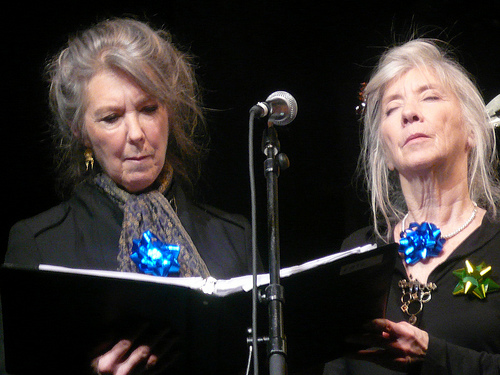
Anna (left) and Kate McGarrigle
Thumbsucker, noun, often derogatory -s: A serious piece of journalism that concentrates on the background and interpretation of events rather than on the news or action; a think piece.
“My impression is that the definition given here is too neutral. I believe that, as generally used, ‘thumbsucker’ refers to a column, not a news story, that is based on no original reporting, not much information, and no research. It's all about what's been circulating in the writer's brain for awhile. It's based more on his abiding worldview than on real information.” --Vincent Fitzpatrick, Fargo, North Dakota
Backgrounder, noun, plural -s:
1: an off-the-record briefing for reporters
2: something (such as an essay) that provides background information about a particular subject.
Kate (left) and Anna McGarrigle
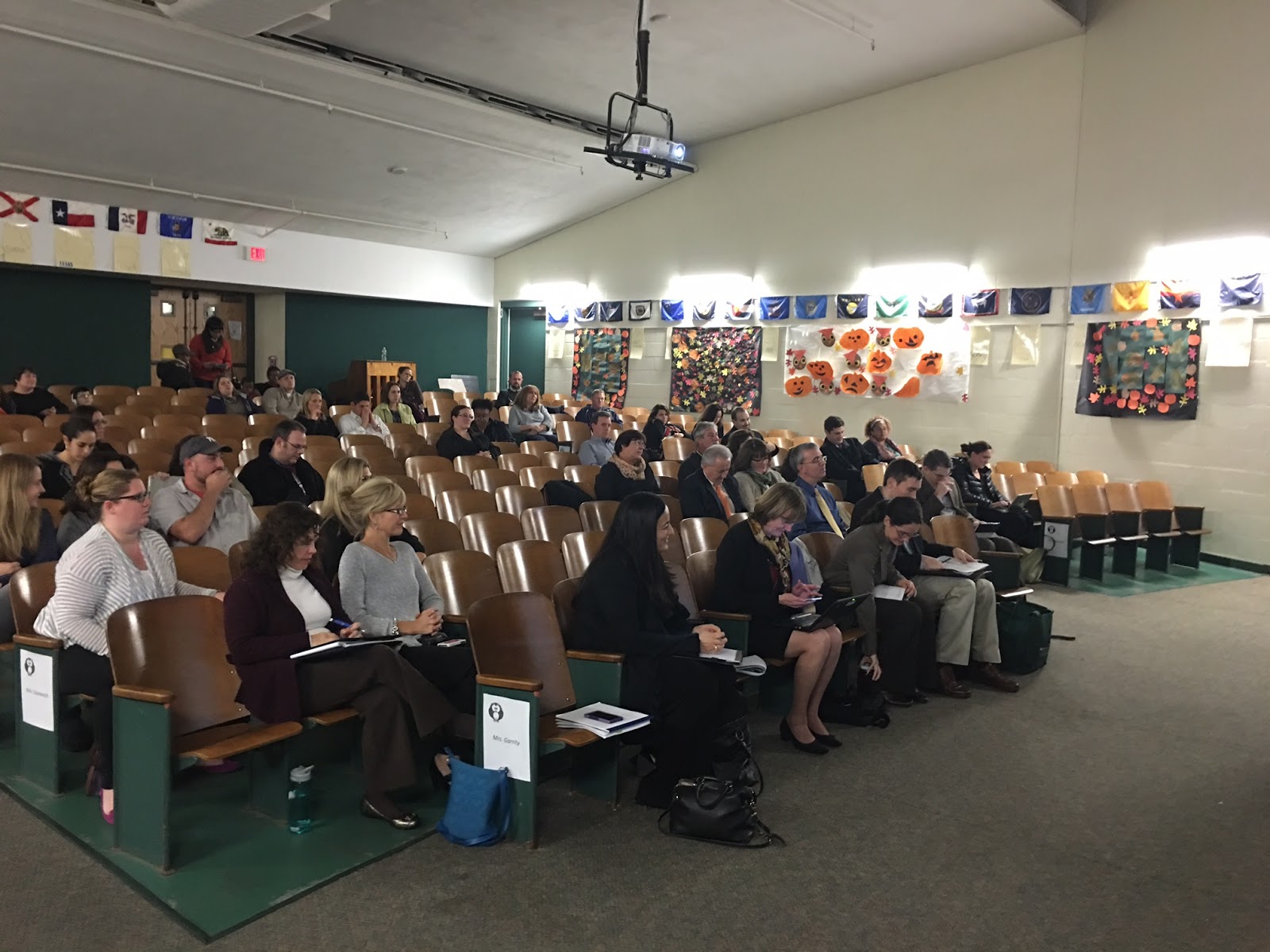
Middletown’s poet laureate, Susan Allison, was scheduled to give a reading from her own work in the Hubbard Room at Russell Library last Sunday. For medical reasons, she wasn’t up to doing it, so it was rearranged so that Susan would read one of her poems as an opener, and other poets and friends would each read another of her poems. It worked explosively well.
A nugget from Allison’s work: “The good life / comes through your eyes / and your ears and your skin / the way a wild animal comes at you / when it is just curious.”
One of Allison’s most notable poems is “Mockingbird,” a portrait of herself as a poet, claiming not much but claiming it to the full. It was read twice, first by Kate Rushin, the poet and teacher, and at the end by the poet herself, affectingly.
A fragment from a review of Allison’s collection Down by the Riverside Ways: “The book ends with a volley of furious poems, among which is one of its most original, ‘The Cow Is for Us.’ In the end, however, there is one saving grace that Allison wishes upon the wagers of war [on the poor], a grace granted them when they are occasionally ‘fortunate enough / to fail and fall, / through grace, contrite.’”
Now for a pocketful of mumbles such are promises.
“Every day I get up and look through the Forbes list of the richest people in America. If I'm not there, I go to work.” --Robert Orben
“A sigh is an amplifier for people who suffer in silence.” --Id.
I don’t do Facebook to any extent, but stumbled upon a grammar school classmate and exchanged our first words in more than 50 years.
“New England farmers used to be so well-educated that they spelled their hog call s-u-i.” --Roy Marshrigger
“Fame is a bee. / It has a song / It has a sting / Ah, too, it has a wing.” -Emily Dickinson, poet (1830-1886)
Dickinson was fortunate to have avoided fame during her lifetime. Fame is sometimes a sumbee.
Emerson wrote “Language is a city to the building of which every human being brought a stone.” Since it’s no longer a sin to end a sentence with a preposition, we can modernize Emerson thus: “Language is a city that every human being brought a stone to the building of.”
That modernization brings to mind line two of a verse from a Leo Kottke song Jack Gets Up, one of the hardest songs to sing all the way through:
And every night when you lay down
You fall flat, you fall flat, you fall flat
Some of us breathe in the brown ground
Everyday in the morning when you get up and you crawl out of bed.
In Swahili, Tumtazame mbwa atakavyofanya means “Let’s see what the dog will do.” So much for the idea that long words mean lofty things.
2015-12-12-Sat “Downtown”